Why do buttocks lose their firmness?
Over time, the skin around the buttocks loses elasticity, and the muscles weaken. This process often begins after the age of 25, when the natural production of collagen and elastin decreases. This affects tissue tension and elasticity.
Additional factors that worsen buttock firmness include a sedentary lifestyle, lack of physical activity, and sudden weight fluctuations. Many people are unaware that an improper diet, chronic stress, smoking, and excessive sun exposure can also disrupt skin structure and lead to weakened gluteal muscles.
Ways to firm buttocks – exercises
Regularly performing buttock exercises strengthens the muscles, increases their volume, and improves the appearance of the buttocks. A good set of exercises engages the entire body but focuses particularly on the lower body. Below is an example workout plan.
Lunges
This is one of the most effective exercises for developing the gluteus maximus and front thigh. Stand with your feet hip-width apart, take a step forward or backward, bending both knees at a right angle. Squeeze your glutes and return to the starting position.
Glute Bridge
Lying on your back with your knees bent and feet flat on the floor, lift your hips, forming a straight line from your knees to your shoulders. Focus on muscle engagement – the glute bridge is an excellent exercise for firming the buttocks.
Barbell Hip Thrusts
This is an advanced version of the glute bridge. The starting position is similar, but a barbell rests on your hips. Lift your hips, controlling the movement and focusing on muscle engagement. This exercise strongly engages the glutes and helps achieve satisfying results.
Donkey Kicks
From a standing position or on all fours, kick one leg back, raising it to hip level. Bend your legs and control the movement. You can also use resistance bands to increase workout intensity.
Side plank with leg abduction
Lie on your side, supporting your body on your elbow and the edge of your foot. Lift your hips, then perform leg abduction with the top leg. This is an effective exercise for the gluteus medius, improving lateral stability.
Deadlift
Stand with your feet slightly apart and grab dumbbells or a barbell. Bend your knees slightly, lean your torso forward with a straight back, and move downwards, keeping the weight close to your body. Then return to a standing position. Deadlifts build muscle mass and improve posture.
Side leg raise on all fours
Get into an all-fours position, then lift one bent leg to the side. Leg raises can be performed slowly or at a faster pace, modifying the exercise depending on your fitness level.
Firm buttocks – cosmetics
Glute training is fundamental, but it's worth supporting the skin externally. Regular use of appropriate products supports skin firmness and improves its structure. Products containing argan oil and squalene strengthen the lipid barrier, and their antioxidant action supports epidermal regeneration.
Slimming creams with caffeine and retinol are also available on the market, which stimulate microcirculation and aid in cellulite reduction. Cosmetics should be used daily, preferably after a bath, performing an energetic massage.
What are the most effective treatments for firm buttocks and slender thighs?
In addition to exercises and home care, it's worth considering professional solutions offered by cosmetology clinics. Below, we present modern methods that contribute to firming the buttocks and improving their shape.
Shockwave therapy
Shockwave therapy is a treatment based on the use of high-energy acoustic impulses that reach deep tissue layers. In the gluteal area, this technology is used to address skin irregularities and reduced tissue tension. Acoustic impulses mechanically affect subcutaneous structures, stimulating regenerative processes and improving circulatory conditions in the treated area.
The treatment helps to loosen compacted connective tissue structures responsible for the characteristic dimpled appearance of the skin. Simultaneously, blood and lymph flow increase, promoting better oxygenation and nourishment of cells. This stimulation supports skin remodeling processes and gradually improves its tone.
What are the effects of shockwave therapy?
One of the most frequently observed results is the reduction of cellulite in the gluteal area. The loosening of septal connective tissue structures helps to smooth the skin's surface and reduce the visibility of irregularities.
The treatment also promotes improved skin tone and elasticity. Stimulation of regenerative processes and improved microcirculation support its densification, resulting in a more uniform appearance of the glutes.
What does shockwave therapy involve?
Each treatment is preceded by a cosmetological consultation. The specialist conducts a detailed interview, analyzes the skin condition, and rules out any contraindications. Based on this, an individual treatment plan is developed.
The first stage of the procedure usually involves tissue preparation using the V-Actor applicator. Its purpose is to stimulate drainage and remove excess accumulated fluids, which facilitates the subsequent penetration of energy into deeper skin layers.
In the next stage, the D-Actor applicator, which emits acoustic impulses, is used. The intensity and frequency of the impulses are adjusted individually. The treatment lasts approximately 30 minutes to an hour, depending on the size of the treated area. Sensations during the procedure are intense but not painful. After the session, you can immediately return to your daily activities without any recovery period.
RF Treatment
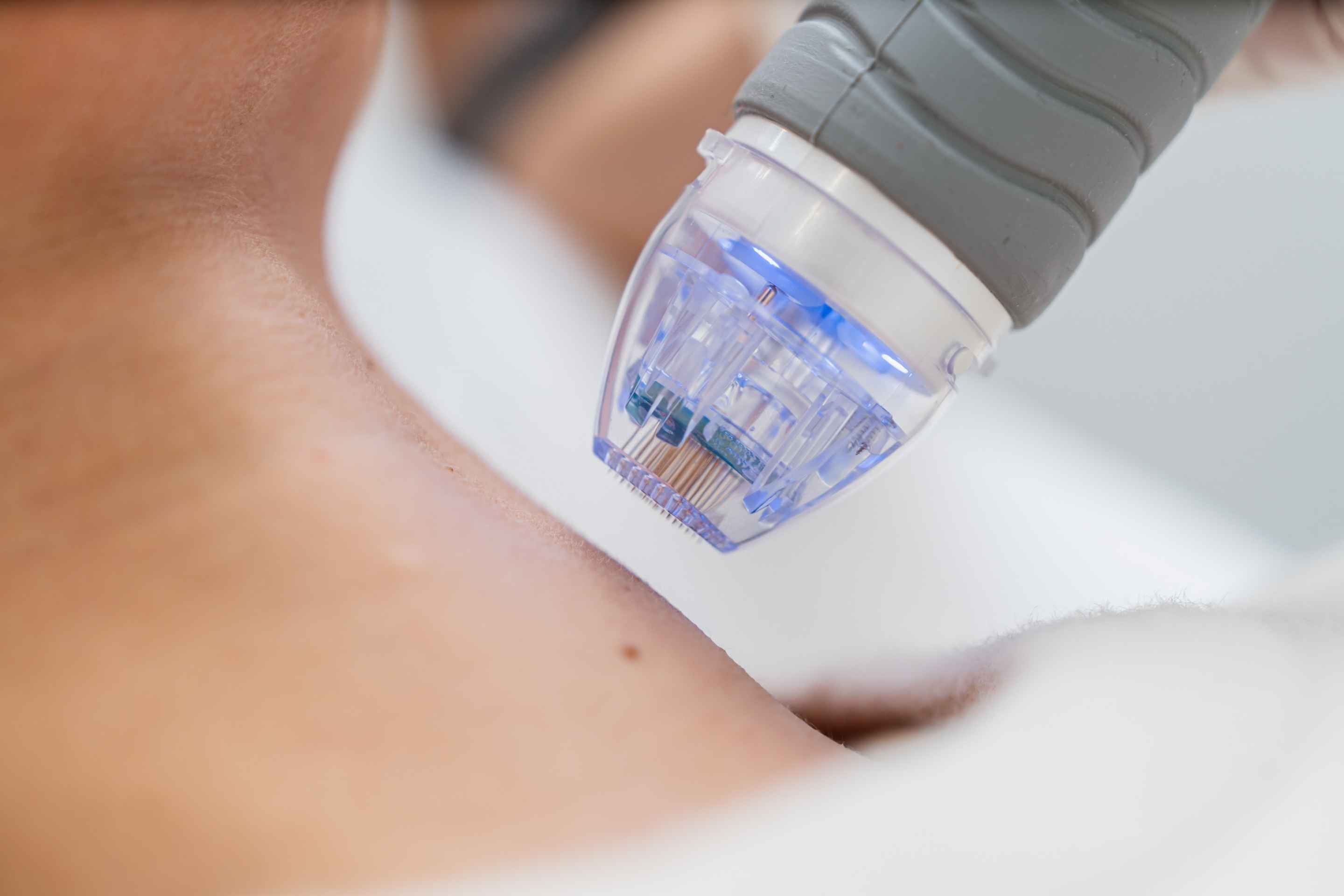
RF Treatment is based on radiofrequency technology, which controllably heats the deep layers of the skin, stimulating its remodeling. In combination with high-frequency ultrasound, it allows for action on both the skin's surface and underlying structures – including adipose tissue and collagen fibers. When applied to the buttocks, these types of procedures contribute to improved firmness and body contouring.
The application of radiofrequency waves stimulates fibroblasts, which in turn triggers the production of new collagen and elastin fibers. This process occurs without breaking the skin's integrity and requires no healing period.
What are the effects of RF treatment?
For the buttocks, RF treatment leads to a noticeable smoothing of the skin's surface and a reduction in the appearance of cellulite. Radiofrequency waves affect tissue structure, improving its density and restoring elasticity in areas prone to sagging.
The thermal action increases skin tension in the lower areas, contributing to a more defined buttock contour. Regular tissue stimulation improves their elasticity, giving the buttocks more volume and maintaining a lifted shape.
How does RF treatment work?
The procedure begins with a consultation with a cosmetologist, who conducts an interview and assesses the skin's condition. Based on the gathered information, the course of therapy is planned, including the number of sessions and the selection of the appropriate applicator. For the buttocks area, UniBody and UltraWave applicators are most commonly used, depending on whether the goal is skin firming, fat reduction, or contour improvement.
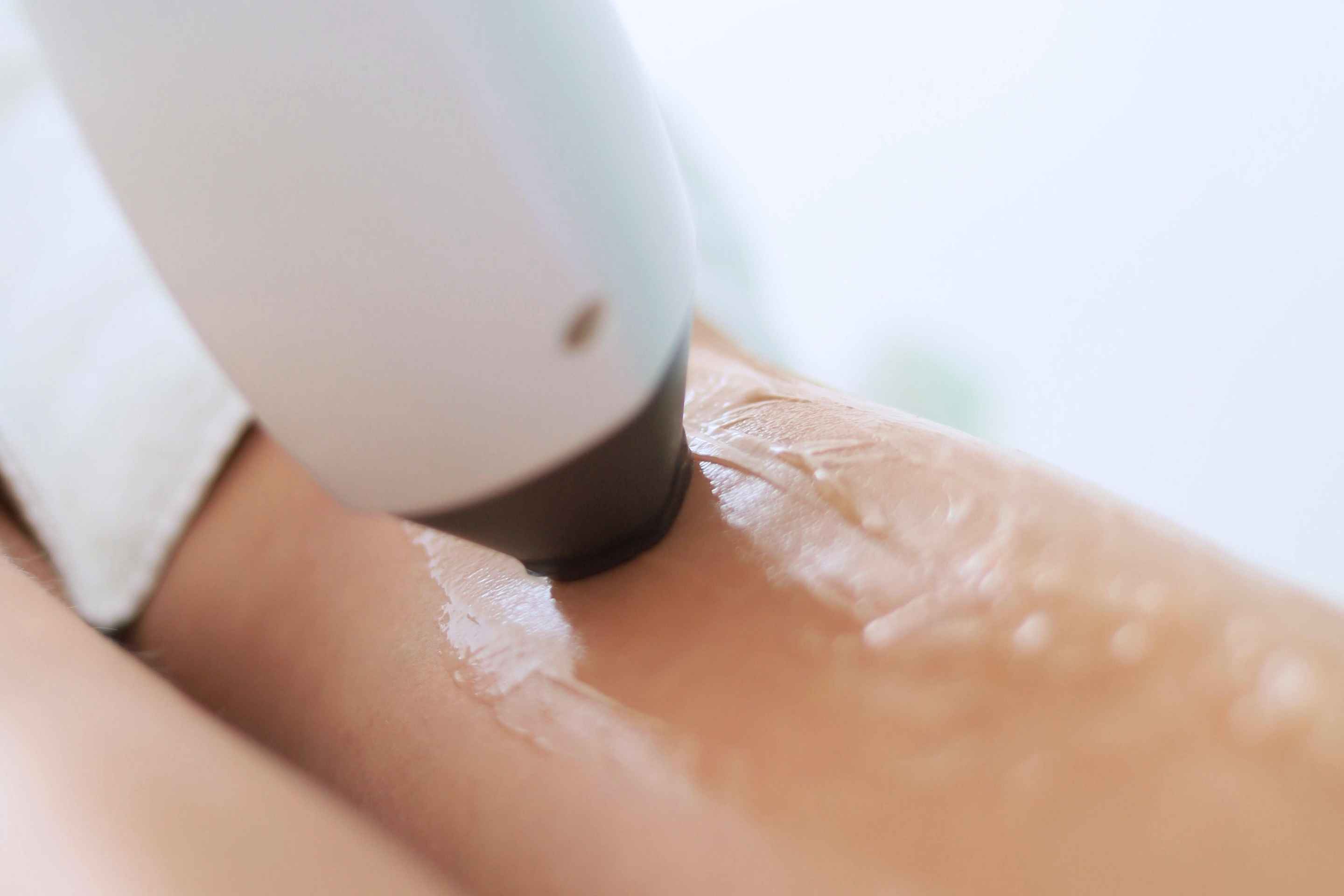
During the treatment, oil is applied to the skin to allow for smooth movement of the applicator. The device emits radiofrequency waves at a precisely selected frequency – the energy penetrates deep into the tissues, raising their temperature to approximately 42°C. This heat activates repair processes and influences the remodeling of collagen structures.
The treatment lasts from 30 to 60 minutes. The patient continuously experiences intense yet comfortable skin warming. The cosmetologist monitors tissue reaction and adjusts parameters in real-time. After the session, slight redness may appear, which subsides shortly. There is no need to avoid activities – daily routines can be resumed immediately.
Muscle Stimulation
Muscle Stimulation using the DEKA SCHWARZY device is a method based on focused electromagnetic field technology. This treatment induces intense contractions in deep muscles without requiring physical exertion. During a single session, up to 60,000 impulses can be delivered, targeting selected body parts, including the glutes.
FMS technology (Focused Magnetic Stimulation) allows for precise action in areas with reduced muscle tone. For the lower body, the main goal is to strengthen the gluteal muscles, improve their volume, and aid in fat tissue reduction. Electromagnetic impulses penetrate deeply, directly affecting muscle fibers that are difficult to activate during regular training.
What can you gain by opting for muscle stimulation?
The treatment helps increase the volume of the gluteal muscles through intense activation. Rhythmic contractions, induced by electromagnetic impulses, stimulate muscle tissue development and improve its density. The result is strong gluteal muscles.
In addition to increasing muscle mass, FMS technology also aids in fat burning. The impulses accelerate metabolic processes, leading to the breakdown of fat cells in areas resistant to diet and exercise. Fat is degraded and eliminated from the body through natural physiological processes.
Another benefit of stimulation is the improved appearance of the glutes – lifting, firming, and contouring them. Electromagnetic muscle activation positively affects microcirculation and tissue oxygenation, which supports skin firmness and contributes to improved surface texture.
How does muscle stimulation work?
Each session begins with a consultation with the cosmetologist. During the discussion, potential contraindications are checked – particular attention is paid to the presence of pacemakers, metal implants, or active inflammatory conditions. Based on the initial assessment, a treatment program and pulse intensity are selected.
The device's applicators are placed on the buttocks. During the treatment, a concentrated electromagnetic field is emitted, causing rhythmic muscle contractions. The pulse intensity is gradually increased to achieve maximum activation while ensuring the comfort of the person undergoing therapy. The treatment lasts approximately 30 minutes, and during this time, one can lie down or recline comfortably, without effort.
Professional buttock firming treatments at LE CHARME
At the cosmetology and aesthetic medicine clinic LE CHARME in Warsaw, all the described methods are available. Each treatment is preceded by a detailed consultation with a cosmetologist, who tailors the plan to the patient's needs. At LE CHARME, we offer effective solutions that improve both the firmness of the buttocks and their volume or shape. The clinic is equipped with advanced devices, allowing work on various body parts – from thighs to gluteal muscles. If you desire lasting results, it's worth trusting our specialists and choosing one of the professional treatments available on-site.
FAQ:
1. Are buttock treatments painful?
Treatments such as shockwave therapy, RF, or muscle stimulation are not painful. They can be intense but are well-tolerated. Individuals undergoing therapy usually feel warmth, pulsing, or muscle tension, without discomfort.
2. How many treatments are needed to see results?
The visibility of results depends on the type of treatment and individual body characteristics. Often, the first changes in skin tone or buttock contour are visible after just 2–3 sessions. To consolidate the results, a full series, usually 6–8 treatments, is recommended.
3. Can exercise be combined with firming treatments?
Yes, this is an excellent solution. Physical activity strengthens the gluteal muscles, while treatments improve skin appearance. This combination accelerates the achievement of results and helps maintain them longer – both in terms of volume and firmness.
Sources:
Negosanti, F., Cannarozzo, G., Zingoni, T., Leone, A., & Fusco, I. (2022). Is it possible to reshape the body and tone it at the same time? Schwarzy: The new technology for body sculpting. Bioengineering, 9(7), 284.
Urdiales-Gálvez, F., Martín-Sánchez, S., Maíz-Jiménez, M., & Viruel-Ortega, E. (2022). Body contouring using a combination of pulsed ultrasound and unipolar radio frequency: A prospective pilot study. Aesthetic Plastic Surgery, 46, 2438–2449.