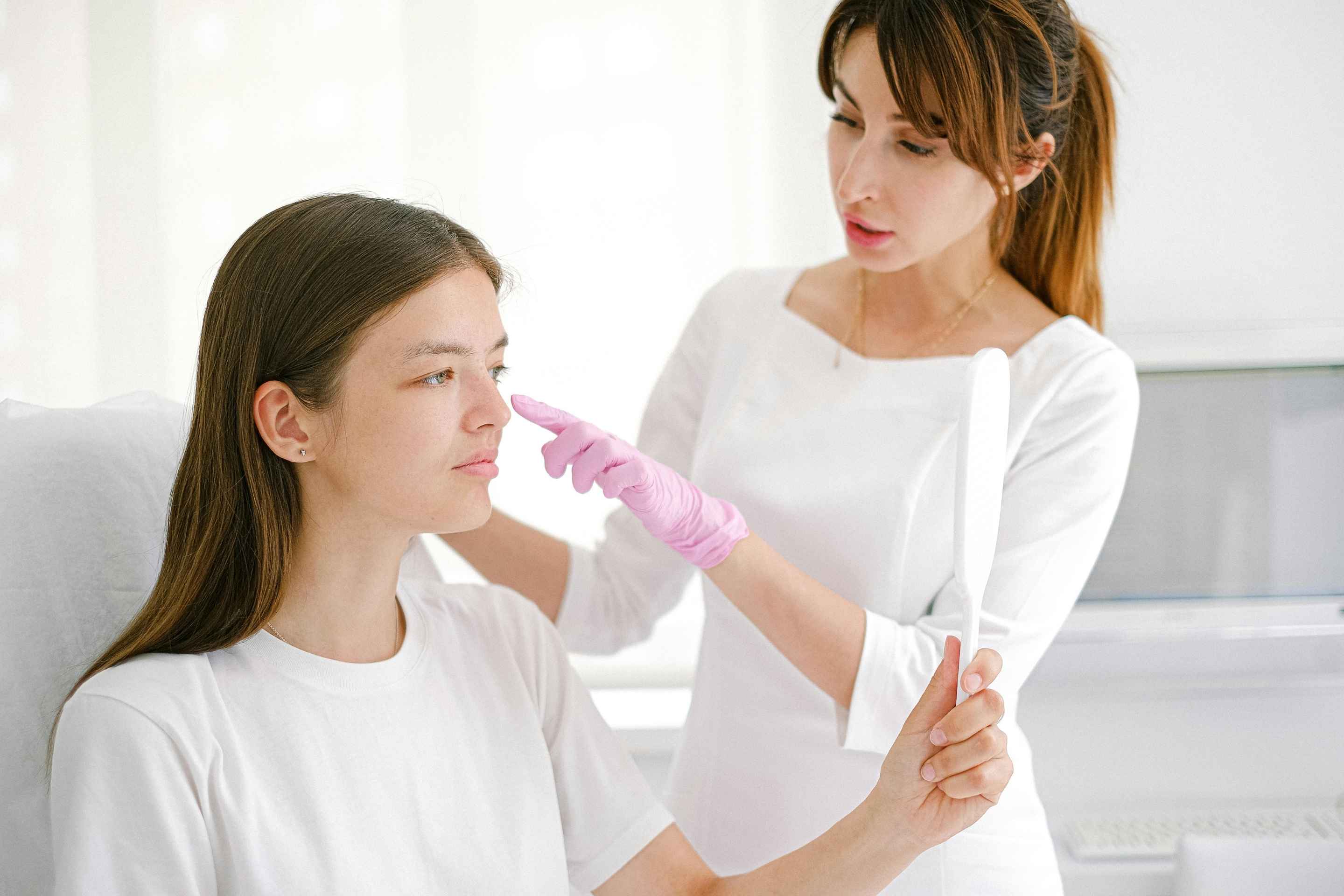
Oily Skin on the Face – Symptoms
Oily Facial Skin primarily manifests as excessive skin oiliness, especially in areas where sebaceous gland activity is highest. This most often affects the so-called T-zone, meaning the forehead, nose, and chin. The skin in these areas becomes excessively shiny, and its surface may be covered with greasy flakes. Along with increased sebum production, other symptoms may also occur, such as redness, a feeling of tightness, burning, or swelling. Some individuals experience severe itching, which intensifies after physical exertion or due to sweat.
A characteristic sign of excessive oiliness is the presence of yellowish patches covered with flaking skin. Their location is not limited exclusively to the face – changes can also occur around the eyebrows, in the nasolabial folds, behind the ears, or on the nape of the neck. In some individuals, oiliness also affects the upper chest, back, and areas with skin folds. These symptoms can be confused with seborrheic dermatitis, which – unlike simple oiliness – is an inflammatory condition and often requires a different therapeutic approach. Although both problems are related, they should not be treated as identical.
Oily Skin – Care
To reduce excessive sebum secretion, proper skincare is essential. Improper skincare, especially if it relies on strong cleansing agents, can only increase skin irritation and worsen the problem. Effective action is not about drying out the epidermis, but about maintaining the skin's protective barrier.
Cleansing – The Foundation of Oily Skin Care
Daily skin cleansing is a fundamental step that helps keep it in good condition. For oily skin, removing excess sebum and impurities is especially important – it prevents clogged pores, reduces the risk of skin blemishes, and regulates sebaceous gland activity. However, avoid products containing strong detergents – aggressive cleansing ingredients can excessively dry out the skin and produce the opposite of the desired effect, intensifying the overactivity of the sebaceous glands.
Cleansing gels or foams containing salicylic acid, plant extracts, and mild acids – such as mandelic or lactic acid – work best for skincare. These products effectively remove excess sebum without disrupting the skin's protective barrier.
Moisturizing – A Necessity, Not an Option
Many people with oily skin avoid moisturizers, fearing they will add to the oiliness. However, this is a mistake that can lead to epidermal dehydration and increased sebum secretion. Skin that lacks moisture tries to defend itself by producing more sebum. As a result, the skin's condition worsens, and pores become more visible.
The best choice includes light, fast-absorbing creams and serums with normalizing and moisturizing properties. These products support the skin's natural protective barrier, improve its elasticity, and smooth its texture. A good soothing preparation may contain vitamins, antioxidants, and ingredients that regulate sebaceous gland activity. Their use helps reduce skin shine and aids in its regeneration after cleansing.
Exfoliation – precise and gentle
Seborrheic skin requires regular, yet gentle, exfoliation. Accumulated dead skin cells hinder skin respiration and increase the risk of inflammation. Instead of mechanical peels, which can increase irritation and spread bacteria, it's better to choose enzymatic peels or preparations with exfoliating acids.
These types of products dissolve the stratum corneum, accelerating its renewal and improving skin texture. Additionally, they help maintain the skin's surface in good condition and increase the effectiveness of subsequently applied cosmetics. Regular use of exfoliating toners with a well-chosen composition supports sebum regulation and reduces pore visibility, contributing to a more even complexion.
How to eliminate seborrhea on the face? Effective treatments at an aesthetic cosmetology clinic
Anti-seborrhea treatments performed at the beauty salon in Warsaw LE CHARME are a complement to daily skincare. Professional procedures help limit increased sebum secretion, improve epidermal structure, and reduce symptoms associated with excess sebum. They won't replace home care, but they support the skin in regeneration and regaining balance.
PRX-T33 – modern biorevitalization without exfoliation
PRX-T33 is an advanced aesthetic cosmetology treatment that utilizes the action of trichloroacetic acid (TCA), hydrogen peroxide, and kojic acid. Chemical peel allows for improving skin quality without damaging its surface – it does not cause visible exfoliation or irritation. The treatment stimulates regenerative processes in the deeper layers of the skin, supports its reconstruction, and aids in regulating sebaceous gland function. It can be used regardless of the season, also as preparation for other procedures, such as mesotherapy.
What are the benefits of the PRX-T33 treatment?
The PRX-T33 chemical peel works in multiple ways – it stimulates skin renewal, brightens discolorations, reduces fine wrinkles, and smooths the skin's surface. Additionally, it supports the treatment of acne scars and improves tissue firmness. The procedure is non-invasive, does not cause peeling, yet effectively aids regeneration.
How does needle-free skin biorevitalization work?
The cosmetologist begins with a consultation, then cleanses the skin and applies the product, massaging it in layers. The procedure is painless, and a soothing cream is applied afterward. The skin is not reddened, and the patient can immediately return to daily activities. The treatment can be performed at any time of year.
SkinPen Precision – microneedling mesotherapy
SkinPen Precision is a medical device used for microneedling mesotherapy. The procedure involves precise, controlled puncturing of the skin with thin microneedles, which create microscopic channels in the epidermis and dermis. This process initiates natural repair mechanisms, including the production of new collagen and elastin. The method is used for scar reduction, improving skin texture, and in treatments for oily and seborrheic skin. Regular sessions help regulate sebum secretion and reduce symptoms of excessive oiliness, while also improving overall complexion. The treatment is FDA-certified and can also be performed on individuals with sensitive skin.
What are the benefits of microneedling mesotherapy?
SkinPen uses mechanical microneedling to stimulate the skin to produce collagen. Microneedling mesotherapy improves skin firmness, evens out its surface, and aids in scar reduction. Additionally, it increases epidermal permeability, facilitating the penetration of active ingredients used during the procedure.
How is microneedling mesotherapy performed?
The procedure begins with skin qualification and disinfection. The specialist attaches a sterile cartridge and performs a series of microneedling passes. At the end of the treatment, the skin is exposed to LED light, and then a regenerating preparation is applied. Effects are noticeable after several sessions – the skin becomes smoother, brighter, and more even-toned.
Dermaclear Alma – Hydro Microdermabrasion
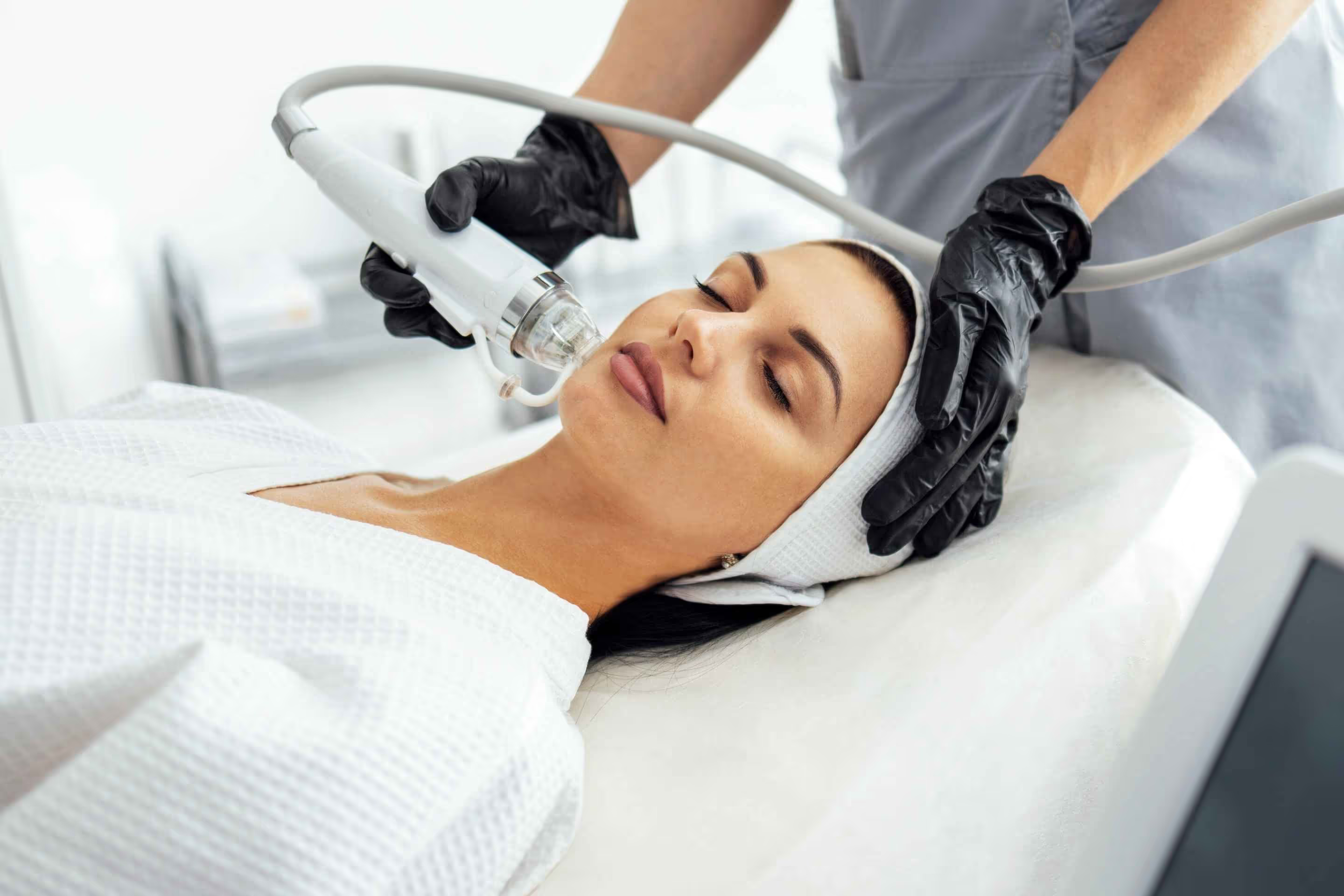
Dermaclear Alma is a modern skin cleansing procedure based on hydrodermabrasion technology. The treatment is performed using a specialized handpiece that combines rotational exfoliation with controlled suction and the application of active preparations. It consists of three stages – exfoliation, cleansing, and hydration. Hydrodermabrasion effectively helps remove dead skin cells, reduces excess sebum, and minimizes the appearance of pores. Additionally, it supports skin hydration and improves its texture. Dermaclear is an effective method for supporting the care of seborrheic skin, prone to impurities and inflammation.
What are the benefits of Dermaclear Alma microdermabrasion?
It is an advanced cleansing treatment that removes dead skin cells, minimizes pore visibility, and facilitates skincare. It also has anti-inflammatory effects, reduces discoloration, and supports the skin's natural repair processes. Regular sessions help combat imperfections and improve overall skin condition.
How is the Dermaclear Alma hydro microdermabrasion treatment performed?
The treatment involves three stages – exfoliation, cleansing, and intensive hydration. The preparations used contain acids and nourishing ingredients that not only cleanse the skin but also care for it. The treatment is comfortable and non-invasive, allowing it to be performed regardless of the season.
FAQ:
1. Does seborrhea always require a visit to a dermatologist?
In mild cases, properly chosen skincare can be helpful, but with severe symptoms – such as itching, flaking, or inflammation – it's advisable to consult a dermatologist. Treating seborrhea may require the use of specialized preparations whose effects go beyond cosmetics.
2. Does seborrhea affect hair condition?
Yes, prolonged seborrhea can affect the condition of the scalp and lead to weakened hair follicles. As a result, excessive hair loss may occur, especially when hair follicle openings become blocked by improperly exfoliated skin.
3. When should you consult a cosmetologist?
If you have difficulty choosing the right cosmetics, it's worth booking a consultation to select appropriate skincare. A specialist will assess your skin's condition, identify its needs, and propose effective solutions – both at-home and professional treatments.
Sources:
Freedman, B. M. (2008). Hydradermabrasion: An innovative modality for nonablative facial rejuvenation. Journal of Cosmetic Dermatology, 7(4), 275–280.
Matthews-Brzozowska, T., Łącka, M., Bernacka, M., & Lichaj, M. (2017). Mesotherapy – a method of facial skin rejuvenation from an interdisciplinary perspective on improving facial aesthetics. Journal of Medical Science, 86(4), 8.